


Alberta’s New Regulations on Transgender Athletes: An Overview
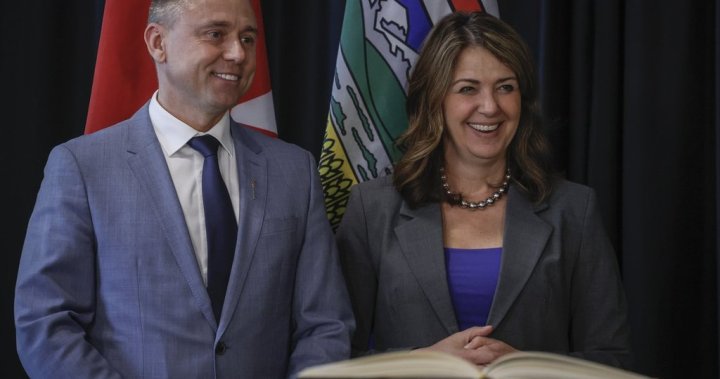
Starting September 1, Alberta will implement new regulations that prohibit transgender athletes aged 12 and older from competing in women’s amateur sports. This legislation, part of broader changes made by Premier Danielle Smith’s United Conservative Party, has sparked significant discussion across various communities.
Regulatory Background
Tourism and Sport Minister Andrew Boitchenko explained that while Alberta will restrict local transgender athletes, competitors from outside the province will still be permitted to participate. The rationale behind this discrepancy stems from limitations in the province’s authority to regulate athletes from different jurisdictions. Boitchenko stated, “We don’t have authority to regulate athletes from different jurisdictions.”
According to ministry spokeswoman Vanessa Gomez, the exemption is rooted in the guidelines set forth by outside sporting organizations, which often adhere to their own rules regarding athlete eligibility. “The government aims to do what is best for Albertan athletes,” she said, while also promoting Alberta as a top location for national and international sporting events.
Debate and Perspectives
The introduction of these regulations has led to a polarizing debate. Supporters of the legislation argue that it fosters fairness in women’s sports, asserting the necessity to balance competition against perceived biological advantages that some transgender athletes may possess. Conversely, critics contend that these regulations further marginalize the transgender community.
Hannah Pilling, a track athlete supporting the regulations, remarked, “It’s kind of hard to enforce that on other athletes that are coming to compete in Alberta, but it’s definitely still not completely fair.” She expressed a desire for the regulations to extend to men’s divisions as well.
Transgender athlete Allison Hadley voiced her concerns regarding the implications of the regulations. She suggested that the allowance for out-of-province athletes undermines the argument for fairness that the government claims to prioritize, saying, “If I had the resources to move, honestly, I probably wouldn’t be in Alberta now.” Hadley emphasized her commitment to competition for health benefits rather than medals, commenting on the difficulty of having that passion taken away.
Impact on Sports Organizations
Mark Kosak, head of the Alberta Colleges Athletic Conference, commented on the implications for local sporting events. He explained that restricting transgender athletes might have led to difficulties in hosting national championships, noting relief over the current regulations. Yet, he added, “This is not a priority. This is not a concern. It’s not an issue.”
Implementation Process
The enforcement of the new regulations is complaint-driven, requiring female athletes subject to complaints to provide proof of their sex at birth. For those lacking sufficient documentation, the government will evaluate alternative documents on a case-by-case basis.
Bennett Jensen, legal director of LGBTQ+ advocacy group Egale, criticized the validation process as a violation of privacy. He highlighted concerns over the potential for public scrutiny of young athletes and noted that the biological advantage argument does not hold in many situations, particularly for those on hormone replacement therapy.
Future Directions
In an effort to promote inclusivity, Boitchenko mentioned plans to expand grants aimed at developing coed divisions within sporting organizations. This initiative seeks to complement the ongoing discussions about creating equitable opportunities for all athletes.
As Alberta approaches the implementation date, the debate continues to evolve, reflecting broader societal conversations about gender, sports, and fairness. The impact of these regulations on local athletes and the sporting community at large remains to be seen.
