


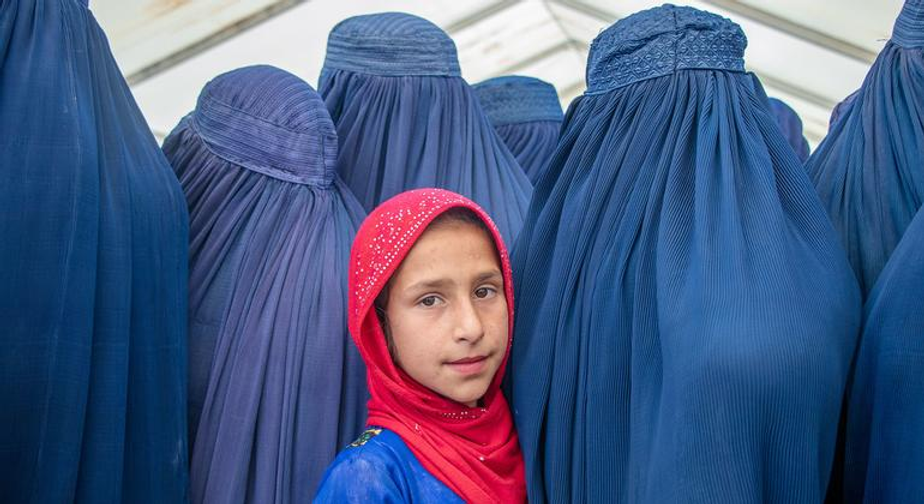
Recent developments in Afghanistan have highlighted a severe decline in gender equality, especially concerning the rights and education of women and girls. A new report from UN Women reveals alarming statistics regarding their participation in decision-making processes and education, underscoring a crisis that has reached unprecedented levels.
Absence of Female Representation
It has been reported that there is currently zero representation of women in both national and local decision-making bodies within Afghanistan. This lack of participation extends to education as well, with projections indicating that no girls will be able to pursue secondary education following a ban due to be enforced in December 2024.
Shocking Gender Inequality Statistics
The Gender Inequality Index released by UN Women offers a comprehensive analysis of the current disparities faced by Afghan women. The findings paint a grim picture of their situation under the Taliban regime, which has overseen what is described as “unparalleled” gender inequality. Afghanistan is now recorded as having the second-worst gender gap globally, with a staggering 76% disparity between men’s and women’s achievements in areas such as health, education, and economic participation.
Deep-Rooted Barriers to Gender Equality
Sofia Calltorp, UN Women’s chief of humanitarian action, remarked that the gender inequality issue predates the Taliban’s return to power in 2021. She pointed out that the institutionalized discrimination enforced by the Taliban has compounded existing barriers. “The issue of gender inequality in Afghanistan didn’t start with the Taliban; their institutionalized discrimination is layered on top of deep-rooted barriers that hold women back,” she explained.
Socioeconomic Impact of Systematic Exclusion
This systematic exclusion has broader societal repercussions. It hampers progress toward the Sustainable Development Goals (SDGs) and hinders economic diversification. “Afghanistan’s greatest resource is its women and girls. Their potential continues to be untapped,” stated UN Women Executive Director Sima Bahous.
Workforce Participation and Challenges
Only 24% of Afghan women are involved in the labor force, compared to 89% of men. Although recent economic pressures have necessitated a slight increase in women’s workforce participation, many are still confined to lower-paid and less secure jobs, in addition to bearing the burden of unpaid domestic work.
Call for International Support
As the humanitarian situation becomes increasingly dire—only 18% of the 2025 humanitarian response plan has received funding—UN agencies are urging donors for increased support. “Time and time again in Afghanistan, we have seen how donor support can be the difference between life and death,” was a poignant message from the UN, highlighting the urgency of international aid.
The Road Ahead
Despite the challenges and ongoing restrictions, Afghan women continue to advocate for their rights and strive for self-empowerment. “Afghan women and girls haven’t given up, and we will not give up on them,” Calltorp asserted. The international community faces a crucial decision: the choices made now will determine the fate of Afghan women and, by extension, the global stance on women’s rights everywhere.
For further insights, refer to the full report from Genocide Watch.
