


A Legacy of Discovery: 30 Women Who Revolutionized Mathematics and Science
Women have historically made significant strides in the fields of mathematics and science, dramatically impacting our understanding of the world and the technologies we rely on today. Here are 30 trailblazing women whose innovations and discoveries continue to inspire future generations.
1. Donna Strickland (Born 1959)
Donna Strickland was awarded the Nobel Prize in Physics in 2018 for her pioneering work on chirped pulse amplification, a method that generates high-intensity, ultra-short optical pulses. This breakthrough has been instrumental in various applications, including LASIK eye surgery. Strickland’s groundbreaking research has reshaped our understanding of light and its interactions with matter.
2. Rosalind Franklin (1920-1958)
Rosalind Franklin’s expertise in X-ray crystallography was crucial in unveiling the double helix structure of DNA. Despite her significant contributions, she did not receive the recognition she deserved during her lifetime, passing away before the Nobel Prize was awarded to those who used her findings. Franklin’s legacy continues to influence the life sciences today.
3. Jennifer Doudna (Born 1964)
Jennifer Doudna co-developed CRISPR-Cas9 gene-editing technology, heralding a new era in genetics. Her work has paved the way for innovative treatments for genetic disorders and has important implications across various sectors, including agriculture. Doudna received the Nobel Prize in Chemistry in 2020 for this impactful research.
4. Sally Ride (1951-2012)
Sally Ride became the first American woman to travel to space in 1983. A prominent physicist and educator, she played a crucial role in the development of space technology and was an advocate for science education for young women. Ride’s legacy includes numerous initiatives aimed at inspiring the next generation of scientists.
5. Katherine Johnson (1918-2020)
Katherine Johnson’s calculations were pivotal to the success of early U.S. space missions. She calculated flight trajectories for several NASA missions, including the first American in space. Recognized posthumously for her contributions, Johnson’s story was portrayed in the film “Hidden Figures,” highlighting her role in breaking both racial and gender barriers in science.
6. Mary Anning (1799-1847)
A self-taught fossil hunter, Mary Anning made significant contributions to paleontology. Anning’s discoveries, which included the first complete ichthyosaur and plesiosaur fossils, laid the groundwork for the understanding of prehistoric life forms. Her legacy has been increasingly acknowledged in recent years.
7. Maria Sibylla Merian (1647-1717)
As a pioneering entomologist, Merian is well-known for her detailed observations of insects and their life cycles. Her book, “Metamorphosis Insectorum Surinamensium,” is considered one of the earliest works documenting biological processes and interactions among species.
8. Sylvia Earle (Born 1935)
Marine biologist Sylvia Earle, nicknamed “Her Deepness,” has dedicated her career to ocean exploration and conservation. She was the first woman to lead an expedition in a submersible to a significant depth and has been a vocal advocate for marine preservation.
9. Mae Jemison (Born 1956)
As the first African American woman in space, Mae Jemison has made significant contributions to science and education. A former NASA astronaut and a physician, Jemison continues to inspire through her advocacy for diversity in the sciences and contributions to health technology.
10. Maria Goeppert Mayer (1906-1972)
In 1963, Maria Goeppert Mayer became the second woman to win the Nobel Prize in Physics for her groundbreaking work on the nuclear shell model. Her research has significantly influenced our understanding of atomic structure and quantum mechanics.
11. Rita Levi-Montalcini (1909-2012)
Rita Levi-Montalcini won the Nobel Prize in Physiology or Medicine for her research on nerve growth factor. Despite facing significant societal barriers, her work has had far-reaching implications in neuroscience and developmental biology.
12. Maryam Mirzakhani (1977-2017)
Maryam Mirzakhani was the first woman to receive the Fields Medal in 2014 for her contributions to the fields of geometry and dynamical systems. Her innovative research continues to influence mathematical understanding today.
13. Emmy Noether (1882-1935)
Considered a foundational figure in modern algebra and theoretical physics, Emmy Noether’s work on symmetries has influenced both mathematics and physics. Her contributions are foundational to Noether’s theorem, a key tenet in the field of physics.
14. Susan Solomon (Born 1956)
Atmospheric chemist Susan Solomon is renowned for her research on the ozone layer, particularly the effects of chlorofluorocarbons (CFCs). Her work led to the Montreal Protocol, a landmark environmental treaty that has helped in ozone layer recovery.
15. Virginia Apgar (1909-1974)
Dr. Virginia Apgar is best known for developing the Apgar Score, a critical assessment tool for evaluating newborn health. Her contributions transformed neonatology and maternal health practices globally.
16. Brenda Milner (Born 1918)
Brenda Milner is celebrated for her foundational research in neuropsychology and her work with Patient H.M., which revealed crucial insights into memory functions in the brain. Milner’s studies continue to influence psychology and neuroscience.
17. Karen Uhlenbeck (Born 1942)
Karen Uhlenbeck was awarded the Abel Prize in 2019, becoming the first woman to achieve this honor. Her revolutionary contributions to mathematical physics and geometric analysis have impacted various scientific disciplines.
18. Jane Goodall (Born 1934)
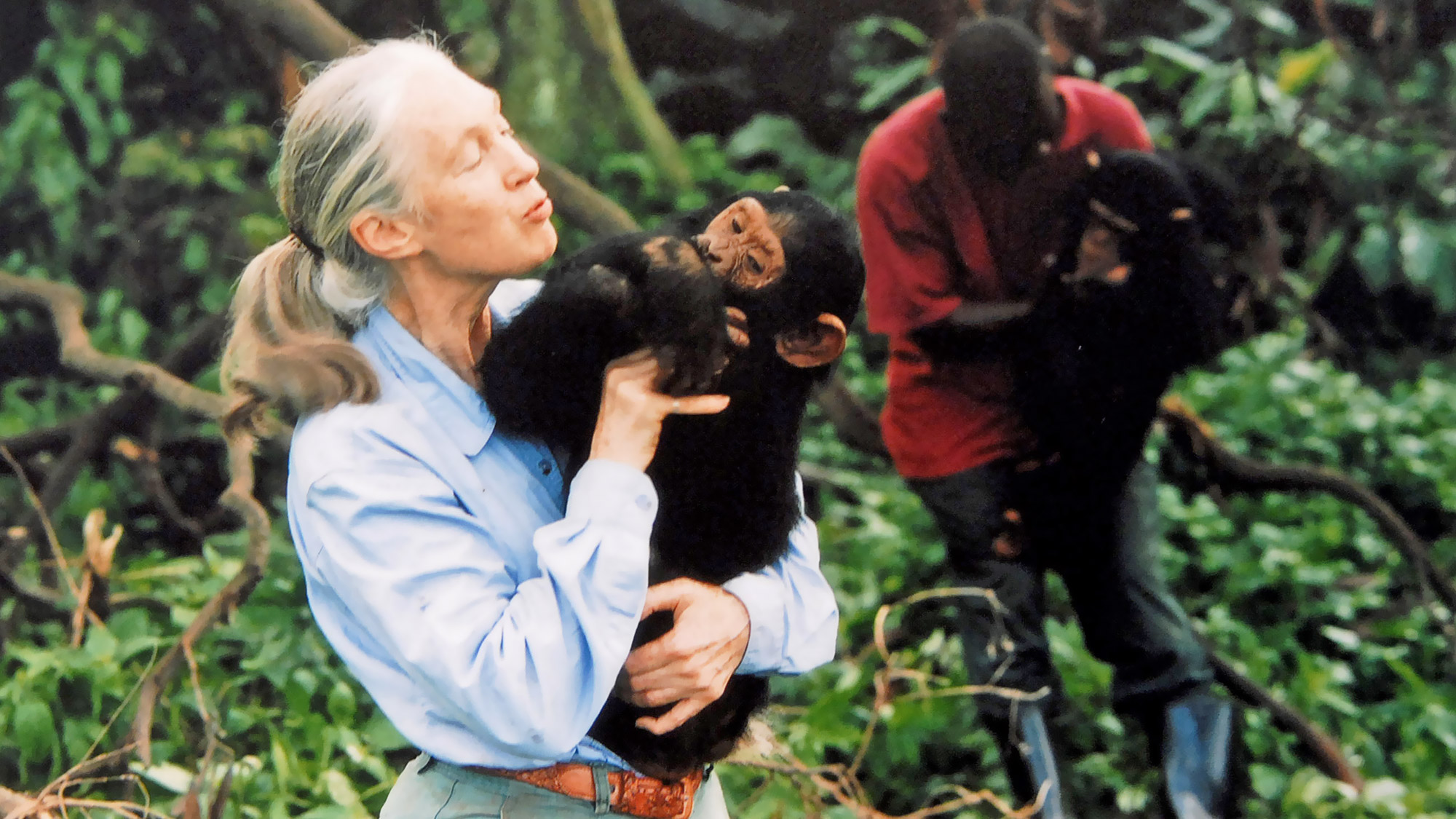
Primatologist Jane Goodall transformed our understanding of chimpanzees through her groundbreaking observational research. Her advocacy for conservation and animal welfare has made her a prominent global figure.
19. Ada Lovelace (1815-1852)
Ada Lovelace is often recognized as the first computer programmer. Her contributions during the early stages of computing and her visionary insights regarding algorithms paved the way for future advancements in technology.
20. Dorothy Hodgkin (1910-1994)
Chemist Dorothy Hodgkin won the Nobel Prize in Chemistry for her work on the molecular structures of important substances like penicillin and vitamin B12. Hodgkin’s technique using X-ray crystallography has greatly influenced modern chemistry and biology.
21. Caroline Herschel (1750-1848)
Caroline Herschel is credited with being the first professional female astronomer. Her significant contributions included the discovery of several comets and her meticulous cataloging of nebulas.
22. Sophie Germain (1776-1831)
Sophie Germain made notable advancements in the understanding of Fermat’s Last Theorem and elasticity theory while overcoming obstacles of gender bias. Her legacy in mathematics continues to inspire budding mathematicians today.
23. Patricia Bath (1942-2019)
Dr. Patricia Bath was a pioneering ophthalmologist who invented the laserphaco probe, revolutionizing cataract surgery. Bath’s initiatives in community ophthalmology addressed eye healthcare disparities.
24. Rachel Carson (1907-1964)
Rachel Carson, through her book “Silent Spring,” raised awareness about the harmful effects of pesticides, leading to significant environmental reforms. Carson is often credited with advancing the global environmental movement.
25. Ingrid Daubechies (Born 1954)
Ingrid Daubechies revolutionized mathematics with her work on wavelets, which are critical in various applications, including image compression. Her achievements have made significant impacts in both engineering and applied mathematics.
26. Marie Curie (1867-1934)
Marie Curie’s extensive research on radioactivity, leading to the discovery of radium and polonium, earned her two Nobel Prizes in Physics and Chemistry. Her groundbreaking work laid the foundation for advancements in medical treatment and nuclear science.
27. Barbara McClintock (1902-1992)
Barbara McClintock received the Nobel Prize for her discovery of genetic transposition, fundamentally altering our comprehension of genetics. Her innovative research in cytogenetics remains influential in contemporary genetic studies.
28. Chien-Shiung Wu (1912-1997)
Chien-Shiung Wu’s contributions to physics, especially her work on beta decay, have been pivotal in subatomic research. As a key figure in the Manhattan Project, her career has significantly advanced the field of experimental physics.
29. Melba Roy Mouton (1929-1990)
Melba Roy Mouton played a vital role in the Apollo missions and was instrumental in developing computer programming for satellite tracking. Her contributions have led to significant advancements in aerospace technology, with her legacy honored posthumously by NASA.
30. Alice Ball (1892-1916)
Alice Ball developed a groundbreaking treatment for Hansen’s disease at a young age, creating a method that revolutionized care for patients suffering from the condition. Her contributions, though not widely recognized during her lifetime, have been acknowledged in contemporary discussions of medical history.
Conclusion
The contributions of these women have not only transformed their respective fields but have also paved the way for future generations of scientists and mathematicians. Celebrating their legacies helps highlight the essential role that women play in shaping our understanding of the natural world.
